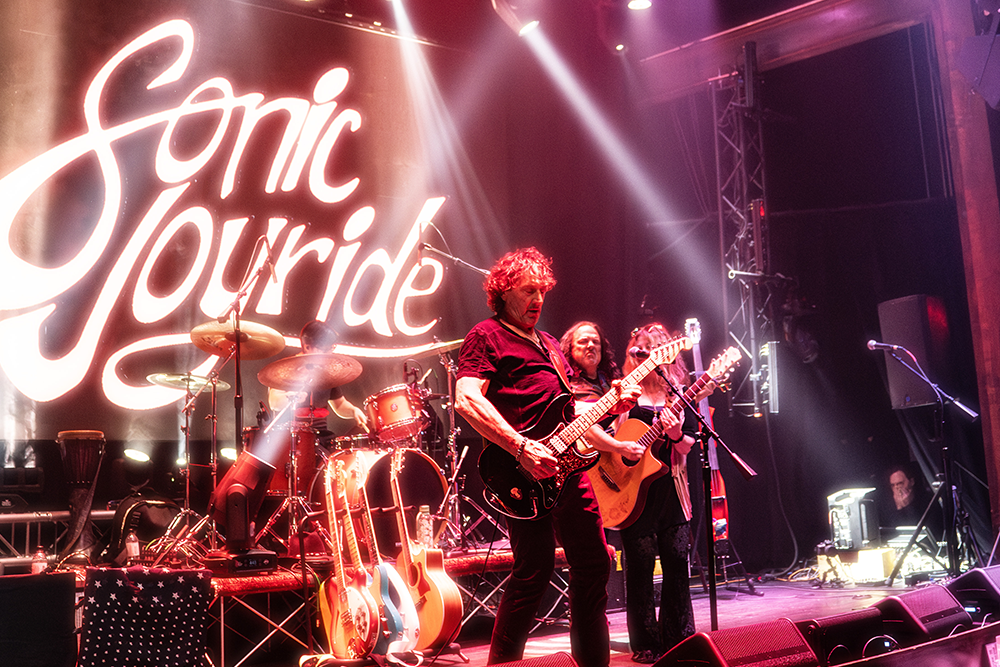




Where the
Music Began
"We are a truly independent band. We've always just been ourselves — and our approach reflects our overall renegade spirit as musicians."
— Chris Hobler
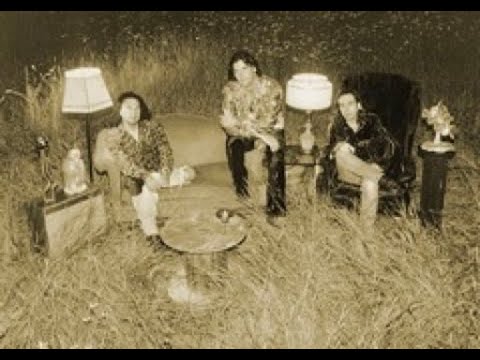
Sonic Joyride traces its roots to 1989, when songwriter Chris Hobler and bassist Rick Reese began playing together while Reese attended the Berklee College of Music. Their first project, Spamparis, became a Boston fixture — earning a spot as a semi-finalist in Musician Magazine's "Best Unsigned Band" competition and landing in Boston Magazine's "Best of Boston" before the duo was 25.
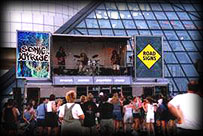
In 1994, Hobler and Reese left Boston for the New Hampshire woods and the pursuit of something more inventive. Sonic Joyride was born. Their 1995 debut received airplay on 180 college stations and earned them opening slots for the Spin Doctors, Letters to Cleo, The Radiators, Ratt, and the Fabulous Thunderbirds.
Their sound — layered, dynamic, and boldly emotional — drew comparisons to XTC, The Jam, and Elvis Costello. Sharp melodies and intelligent lyrics met an adventurous, restless musical spirit that refused to stay in one place. Rather than waiting for major labels to open doors on their terms, the band approached music as something meant to connect people and spark conversation.
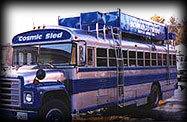
That independent mindset soon led to the Cosmic Sled — and everything that followed. The band's single "You'll Never Know" reached #84 on national rock radio charts. Their catalog grew to four albums on Anomaly Records. They were hailed as one of the most innovative independent bands in America.
At the heart of it all was Chris Hobler — a songwriter of rare intelligence and a frontman of magnetic energy. In 2001, at just 36 years old, Chris was diagnosed with ALS (Lou Gehrig's Disease). True to his spirit, he refused to let it define him. His foundation, Hope Happens, entered a transformative partnership with Washington University School of Medicine in St. Louis — a collaboration that gave rise to the Hope Center for Neurological Disorders. That center thrives today, more than two decades later, with over 100 research laboratories — including one named in his honor: the Christopher Wells Hobler ALS Laboratory.
Chris passed away in 2005 at age 39, leaving behind music, a legacy, and an enduring message: happiness comes "from between your ears, not your circumstances." ALS took his voice. His songs remain — and now they're back on stage.
Sonic Joyride has been fortunate to share the stage and studio with a remarkable succession of drummers, each bringing their own voice to the band's sound.
Ed was there from the very beginning — the founding drummer who helped establish the raw, driving energy of Sonic Joyride's early live shows and the sound of their 1995 debut.
Paul served as drummer during the era of Sonic Joyride's second album, Bazaar. A seasoned touring musician and true road dog, Sahlin helped shape the rhythm section and contributed to the progressive musical direction heard on the record. His playing anchored the evolving Sonic Joyride sound during the formative period that preceded the full Cosmic Sled touring era.
Ken powered the band through the height of the Cosmic Sled years — the Breathe cycle, 30,000 miles of road, and 240 tour dates. A Berklee graduate and prolific touring drummer, Ken went on to a career spanning country, rock, and indie, and owns The Compound Recording Studio in Austin, TX. His departure to address a serious medical condition marked the end of a remarkable era.
Matt stepped in for the Behemoth album sessions, bringing a heavier, more muscular feel that suited the band's expanding sonic palette. A Berklee graduate and notable figure in the progressive rock scene, Matt has since recorded and toured with Lita Ford, Gary Hoey, Gus G, and others. He runs Bandstand Live Rock Academy in Taunton, MA.
A Grammy-awarded world-class session drummer who has recorded and performed with Aretha Franklin, Alice Cooper, Joe Satriani, Shakira, Mick Jagger, Marillion, and GTR (with Steve Howe and Steve Hackett). Mover brought his extraordinary precision and musicality to the Behemoth recordings — lending the sessions a caliber of playing that few could match.
The latest in this proud lineage, Thierry brings the power and precision of the new Sonic Joyride — carrying the rhythm tradition forward with authority.
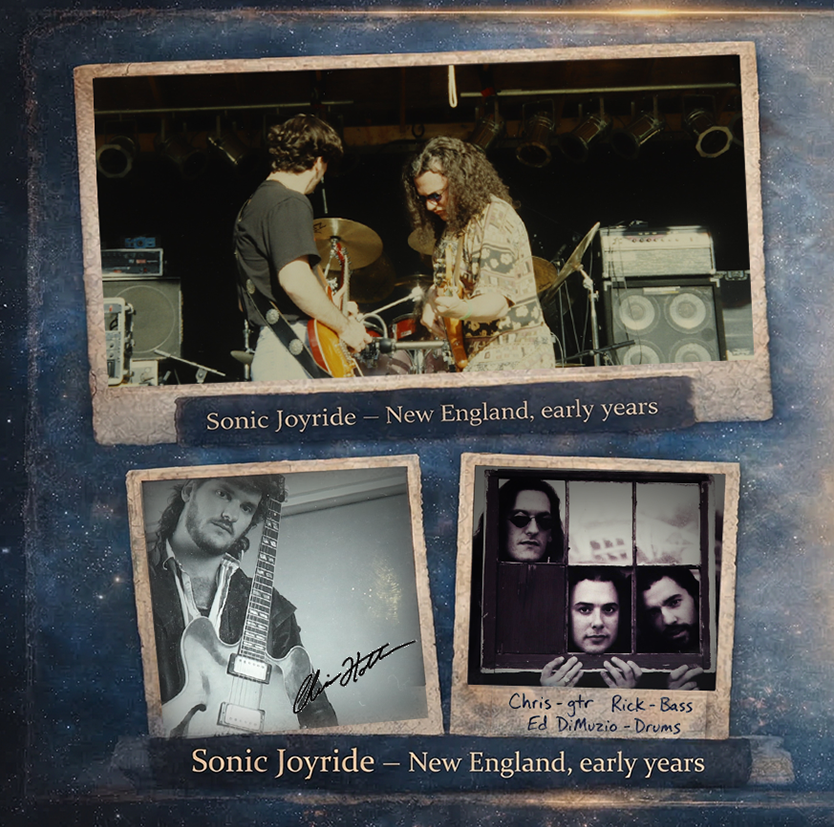
1994 — New Hampshire. Built on fearless creativity, sharp songwriting, and direct connection with audiences. Preceded by Spamparis, Boston's most buzzed-about unsigned band of 1992–93.
Four albums on Anomaly Records. 180 college radio stations. A single that reached #84 on national rock radio charts. Airplay across 100+ commercial stations nationwide.
From guerrilla roadside concerts to national coverage:
Diagnosed with ALS at 36, Chris's foundation Hope Happens partnered with Washington University School of Medicine in St. Louis to create the Hope Center for Neurological Disorders. That center thrives today — over two decades later, with more than 100 research labs, including one named in his honor: the Christopher Wells Hobler ALS Laboratory. He passed in 2005 at 39, leaving songs that still matter and a spirit that refuses to go quiet.
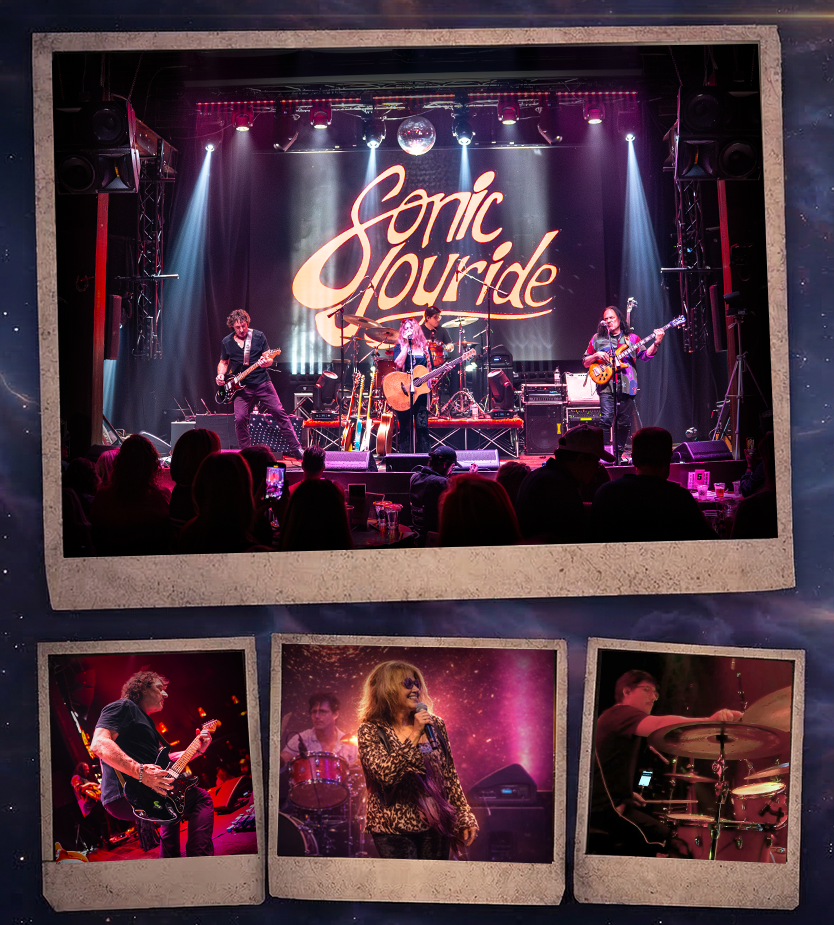
ALS silenced Chris's voice. Sonic Joyride restores it — through performance, through memory, and through music that was always meant to reach new audiences.